
What’s it like to get cancer? There are 18.1 million cancer survivors in the United States. They went through a journey of anger because they were diagnosed with cancer, scared by the chemo and radiation, isolated and lonely in aftercare, looking to be brave for their family and loved ones, and longing for others’ support.
The stories portray cancer patients’ lives, helping us understand their journey personally. The takeaway is something everyone can use to prepare for the situation and gain a deeper understanding of how someone battles cancer and wins in life.
Cancer is a discovery process of cancer cells in our body, often through an initial physical illness that triggers a search for the cause. When the cancer diagnosis is announced, the treatment plan is designed, and the cancer patient begins their treatment journey.
Cancer survivor stories tell us how they overcome adversity and inspire hope. Their journey went from falling ill physically to discovering their diagnosis of cancer to cancer treatment. In their stories, we can see the pain, struggles, triumph, strength, and love that shine through their entire cancer-battling journey.

Why Cancer Survivor Stories Matter?
Cancer survivor stories matter to all of us. Cancer can happen to anyone, including their family and loved ones. From hearing their stories, we can better prepare ourselves or our family or loved ones for cancer healing and become mindful of cancer prevention.
Behind each name is a warrior who is not afraid to take a chance on choosing to live. Their spirits are strong, and we can learn how they overcome adversity and inspire hope.
Inspiring Hope: Stories of Triumph and Survival

Story 1: Emma, who fought cancer for six years and survived
Emma was a 45-year-old woman who was initially diagnosed with stage 2 ovarian cancer and then with breast cancer and survived after 18 years.
She felt this dull pain in her stomach and in her uterus that lasted 9 months. “Oh, it’s just a stomach pain and nothing more.” She thinks to herself.
As she visited her doctor for her annual physical exam checkup, she casually mentioned her stomach pain, and her doctor referred her to a doctor who specializes in female reproductive health. The gynecologist, Dr. Eva, found a benign tumor as big as an orange in her uterus.
Then, unexpectedly, the tumor grew into the size of a cantaloupe. The doctor explored the tumor via surgery and announced her diagnosis of stage 2 ovarian cancer in 2004.
“What do I do now?” She murmured in shock. She remembered her grandmother getting sicker with breast cancer and heard one of her aunts died from breast cancer. “Is this real?” She sat in disbelief and confusion. “You can’t possibly diagnose people with cancer just with a scan?” She doubts the doctor’s diagnosis.
“Why is my body growing a tumor on me?” There are so many questions she has about everything. She felt her world was spinning.
“You will need chemotherapy,” the doctor said. She wanted to say something, but the only thing that came out of her mouth was “Okay.” She tried to squeeze a smile and comply. Deep down, she felt terrified.
She reflected on her current lifestyle, and she wanted to know what she could do differently to reduce her chance of growing her cancer. She began to exercise and try to find other ways to destress and eat more nutritious foods.
Chemotherapy made her lose their appetite and become nauseated. She thought it was over after one year. The next year, in 2005, the doctor found the cancer in her uterus returned. She fought the cancer one more time. The year of 2007, they found the cancer again in her ovary.
This time, the doctor strengthened the measures to cure the cancer. The doctor laid out three different surgical plans and gave 5 additional treatments with one phase 1 clinical trial.
Just when she thought the treatment had eradicated the cancer from her body, she went on to live her life. In 3 years, she was diagnosed with breast cancer. The doctor removed her cancer from the breast (lumpectomy) and treated it with radiation (2010).
The buzzing noises from radiation are both hot and sudden. After radiation, Emma took Herceptin, an anticancer drug and an anti-estrogen, to keep cells from making or using a sex hormone estrogen therapy.
The doctor was curious to know if she had the gene that leads to ovarian cancer. However, the test came back twice negative.
The past six years have been extremely difficult for Emma. She wanted to become free of cancer so severely, but the cancer just kept coming back. Eventually, she learned to accept her cancer and to live with it.
She became an expert in her own treatment decisions and found ways to continue to do things she loved, such as traveling.
Her friends, family, and coworkers rally around her during this difficult time. Laughter was an essential therapy for her. The Muppet movies and other funny videos can keep her spirits high. Emma’s loving parents are always by her side during every surgery.
She thought well of her family, friends, and husband’s support. But she felt that she was missing something. Her cancer community gives her hope. She can see how she was not alone in battling cancer.
Cancer patients share many of the side effects and sicknesses, among others. Not being able to sleep, tummyache after treatments, and uncertainty about cancer’s reappearance after treatments are things other cancer patients are worrying about.
Her cancer community shows her what it is like to live before treatment, during, and after treatments. They taught her what she could control and what she couldn’t control. She could talk to people who have tried new treatments and chose to enjoy the remaining years of her life. She learned lessons from every one of them.
This help was so valuable that she wondered why she didn’t seek to join the community earlier when she could receive help and manage her stress and ability to sleep better.
Because of her cancer journey, she became a cancer research advocate, and she provides peer support to those going through cancer. “There’s a lot of pressure for cancer patients to stay positive. But the pain made everyone cry, and the treatment made everyone angry.” She continued, “Positivity doesn’t change the entire situation, but it makes the journey smoother and easier.”
“There’s a lot of power in all of us; we should trust ourselves.” “There are no right or wrong answers to cancer treatments, and every one is unique in how they deal with it, and they are all correct answers.”

Story 2: Elizabeth’s stomach pain mystery turned out to be a rare cancer in her pancreas, liver, and appendix in the past three years
“What happened to my stomach? It’s been gassy and feeling worse over time.” Elizabeth was a 31-year-old marathon runner. She’s always had celiac disease, which is an illness caused by an immune reaction to eating gluten. Recently, she experienced many stomach issues, and it didn’t get better over time.
She went to the doctor to check out why. The doctor brushed off her worries and said, “Oh, you are overworrying; it might be irritable bowel syndrome. Would you like to see a therapist for depression?” For her showing so many signs of worrying and sadness over her sickness, her doctor even thought that her fear might not be realistic.
Still, she didn’t give up. Somewhere in her gut tells her that things are more serious than irritable bowel syndrome and depression, her doctor said.
She asked for a C.T.C.T. scan, M.R.I., and P.E.T. scan. And they found the cause of her stomach issues. She saw spots on her appendix, pancreas, and liver through the C.T.C.T. scan and M.R.I. scan that turned out to be cancer in stage 4 (stage 4 neuroendocrine cancer).
The insurance company refused to reimburse them for her P.E.T. scan that found the cancer in her pancreas and liver.
Elizabeth was so shocked and appalled. She thought to herself if she didn’t dig deeper into her illness, she could die. Her experiences with the care gap in cancer diagnosis motivate her to self-search for the best treatments and find organizations that support her needs.
Elizabeth had the most brutal time finding the right medical team. Throughout her diagnosis and treatment journey, she had pushback from her doctors, insurance companies, and other members of the medical community.
The treatment journey can be scary. However, Elizabeth had support from her family, friends, partner, and young adult cancer program community. Some of her coworkers and friends also had neuroendocrine cancer, so she could ask them questions and get answers.
She became cautious in choosing her doctor and care team. She would interview them and ask them questions to ensure they listened to her concerns and took them seriously.
Still, doctors estimated her chances of survival to be around 25% for living for another five years.
To treat her cancer, she wanted to remove as much and as large amount of cancer from her body as possible. Eventually, she removed part of the appendix, liver, and some lymph nodes with hormone therapy to reduce excess hormones produced by the tumors (neuroendocrine tumors).
A year after her initial treatment, the doctor found a spot on her pancreas in December 2021. It was difficult to hear, but it was unexpected.
The new diagnosis makes her feel down, so she seeks support from her therapist and reads stories of cancer survivors to seek wisdom. She got the spot removed.
Now, she carries a foot-long scar on her stomach and P.E.T. scans.
Her life has changed drastically. Her mindset has shifted from worrying about other’s opinions to feeling free to be herself and continue to learn from other’s cancer journey.
She takes the initiative to learn about cancer and drives her treatment options.
She loves outdoor adventures, so she joined First Descents. In this adult cancer outdoor adventure group, she skydived, rock climbed, rappelled down mountains, and participated in roller derby, skiing, and snowboarding.
She joined the National Coalition for Cancer Survivorship (N.C.C.S.), Cactus Cancer Society, and Stupid Cancer, two cancer support groups.
She sets her goal to be happy, and she wants to reach out to help others who have cancer to know they are not alone.

Story 3: Sam who got breast cancer and prostate cancer but survived after 25 years
Sam was a happy 40-year-old teacher in the health care system. One day, he noticed a small lump under his nipple in 1996. Slowly, his nipple started bleeding.
He went to his family doctor, who referred him to a surgeon. Sam found out about his breast cancer at stage 2; the tumor had grown more deeply into nearby tissues.
He also found out it was rare for men to get breast cancer. Only 1% of new breast cancer cases are men. When he tells others about his diagnosis, their mouth would drop open in disbelief.
San underwent surgery to remove part of his breast, known as a mastectomy, following chemotherapy, which uses drugs to stop the growth of cancer cells as well as another drug that blocks the hormone estrogen to keep the breast cancer cells from growing (tamoxifen).
He felt tired all the time, and he was nauseated a lot.
His sister was very supportive of him. She flew to be with him for his surgery and stopped her work for him.
When he completed his treatment, he felt lost. He missed the doctors, nurses, and therapists he was seeing during his treatment. “They told him that he did a good job and they will see him back in 3 months.”
Five years after his recovery from breast cancer, Sam was again diagnosed with prostate cancer. They monitored his cancer for several months before they decided to get radiation targeted at the tumor, as known as external beam radiation therapy.
He also found out he had a gene mutation that would increase the risk of him getting prostate cancer (CHEK2 gene).
After his experiences with cancer, he decided to focus on the here and now instead of building a 20-year plan.
He became more involved in the cancer community. In fact, he switched his job to work for the Ithaca Breast Cancer Alliance. He then spent the subsequent 25 years involved in the cancer community, providing one-on-one support and being a male breast cancer panelist for speaking engagements. He also has a regular newspaper column to help others living with cancer.
Furthermore, he engages with cancer researchers, doctoral students, and cancer survivors at Cornell University to bridge the gap between research and real-world applications. Sam is actively involved in the cancer community, including the NCI Cancer Community Partnership.
He remains open-minded and flexible in his learning and approach to cancer treatments. “It’s so important that people get to choose their way to treatment, and there’s never a wrong answer for it.”
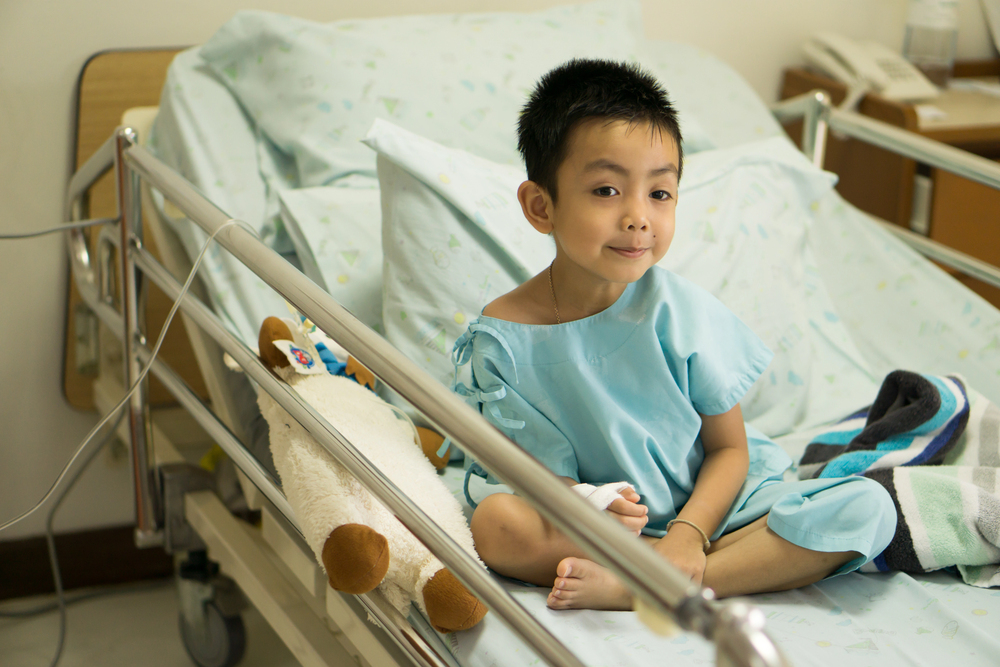 Story 4: David’s childhood cancer in his femur bone (Ewing’s Sarcoma)
David was a happy child who lived in China when he was nine years old. He was busy climbing trees, then jumping off, and practicing Brazilian jiu-jitsu.
As a kid, he complained about pain in his hip. When his parents noticed he didn’t want to climb or play anymore, they took him to the pediatrician. The pediatrician ordered an X-ray to check his bones and an M.R.I.
Initially, they thought he was experiencing growing pain or an infection in his hip. However, they found something even more shocking. He had two tumors, one on his upper femur and another on his lower femur.
His parents were so scared. “What do we do?” David blinked his wide eyes, not knowing what the diagnosis meant.
His family decided to move back to the U.S.U.S. from China to seek treatments at St. Jude Children’s Research Hospital in Memphis, Tennessee. It took a lot of work. The family was unsure about David’s future and health, but they wanted to give their son the best chance in life.
While he lost mobility and missed his friends from China, he wanted to get better. He took his medicine bravely and endured through his chemotherapy, where he lost his hair and appetite.
He was also in a clinical trial to receive new types of treatments. His doctor removed the smaller tumor and the posts, but the enormous tumor on his upper femur wasn’t able to be removed completely.
The doctor decided that he would remove David’s femur. Losing his femur, he spent the next 13 months to learn how to walk on his own in physical therapy.
His medical team was dedicated and caring. They provided lots of support, and his family never needed to pay for treatment, travel, housing, and food. His siblings were there by his side.
He liked to play video games with his siblings when he was between the treatments.
After David’s recovery from his leg surgery, he found a new passion in rock climbing. At a new rock climbing gym in Memphis, he re-experienced the joy of climbing up and down.
He won the U.S.A. para-climbing national championship for his category through his hard work and dedication. He is now on the team U.S.A. for para-climbing.
David’s diagnosis of femur tumors drastically changed his family’s life. They are more health conscious. They don’t go out and eat as often and avoid spending much time in the sun.
David and his family learned to be hopeful despite all of the challenges. They learned to focus on one another and the present moment to live their lives to the fullest.

Story 5: Myra’s family history of colon cancer, her dad, and her journey both passed away.
When Myra was 12, she was unaware that her dad was diagnosed with cancer. Due to their culture that stigmatized cancer in the community, his parents didn’t tell anyone about his diagnosis, fearing the community would ostracize his family.
He suffered from chemotherapy and the pain of colon cancer alone. They kept the illness a secret from her and her brother. Myra was confused and worried about the sudden illness and her dad’s skin color change throughout her middle and high school time.
Unfortunately, Myra’s dad was diagnosed with colon cancer again after she graduated from college.
“We knew something wasn’t right. Dad, what is going on? Why were you suddenly so sick when I was in middle school and throughout high school?” His dad couldn’t tell her the news.
He said, “Talk to my oncologist, please.”
She and her brother got a hold of his oncologist. In his office, he showed them X-rays of their dad’s lungs because the cancer had spread from his colon into his lungs.
It was an emotional moment when they finally realized all those times his dad suffered from cancer treatment in silence.
Her dad was in the hospital for months, and finally, he came home. Her dad celebrated their wedding anniversary with Myra’s mom and the whole family the week he came home.
His last words for Myra were that she needed to make sure her brother graduated from college, take care of their mom, and never ever tell anyone about how he died. Soon after, her dad went back to the hospital and passed away.
Everyone in the community was so curious about his illness; they wanted to know how he suddenly passed away, and she was afraid to go against her dad’s wishes.
When she was 29, she felt sick to her stomach, and her uterus wouldn’t stop bleeding. She didn’t see a doctor for a whole year. Her cousin encouraged her to see his doctor, although the insurance network didn’t cover for her.
Cancer cells existed in the lining of her uterus; she was diagnosed with stage 3 endometrial cancer the day before her brother’s wedding.
When she went back to the hospital, they removed her ovaries. After the surgery, her body started to experience hot flushes, difficulty sleeping, and night sweats. It turned out she was experiencing menopause after her surgery.
She continued to receive chemotherapy and radiation after the surgery.
Myra was curious to know if her cancer had to do with her dad’s diagnosis. Her dad was diagnosed with cancer at the age of 39. She started to think that her cancer could relate to her dad.
She decided to do a genetic test, and the result came back positive for increasing risks of many cancers in the abnormal area, including colorectal cancer, endometrial cancer, ovarian cancer, stomach, small intestine, pancreas, bile duct, urinary tract, and brain before the age of 50 (Lynch syndrome).
She checked her colon with a camera on a tube via colonoscopy yearly. Eventually, the frequency went up to twice a year, three times a year, and then four times a year.
They found a small polyp, which is a growth in the colon. The doctor wanted to remove her whole colon and use a bag (ostomy) to collect waste. To hear that diagnosis and treatment is utterly scary for her. She didn’t want to remove her whole colons.
Myra found another doctor to try to remove the small growth, but it was risky and challenging for the team. They decided to remove the right side of Myra’s colon.
Nine months after her colon surgery, her medical team discovered two cancerous spots on her abdomen and on her right thigh that turned out to be skin cancer (melanoma). Her doctor got them surgically removed quickly.
She continued to get colonoscopies for her remaining colon. Unfortunately, her doctor began to see slight growth on the left side of her colons. Initially, they thought it could be cancer, but then they confirmed it was cancerous within two weeks.
The doctor removed the polyps and did two more colonoscopies in two weeks to ensure they removed all the cancer cells.
Since she lost the right side of her colons, she began to throw up regularly, and her stomach hurt. Her medical team thought she had irritable bowel syndrome (I.B.S.). She threw up regularly, and her stomach hurt.
She was in horrendous pain and was extremely tired. She lost 20 pounds in less than a month. “What happened to me?” She whispered to herself in horror. “Eat something, Myra.” Her mom urged. “I can’t eat. I don’t want to eat. Stop trying to make me eat!” She cried and pushed the food away from her mom.
Her German Shepherd, Woody, would bring her dog food. “No, Woody, I can’t eat right now.” Again, Myra would push her German Shepherd away.
Her journey was a long one fraught with discouragements and intense reactions to the treatments. She had the support of her dog Woody, a German Shepherd, and another one after Woody, Phineas, friends, and families, but she wished they were more communicative with each other.
She was initially upset about removing so many parts of herself due to cancer surgeries.
Myra eventually realized that what she had was beautiful. “Like a garden where some weeds are rising, and they are removing those weeds.” She continued, “But what remains of the garden is still beautiful and thriving.” She continued to hope for a breakthrough.
She wanted to stay positive, and Woody helped her. Woody would wage his tail and watch over her as she slept. Myra would learn how to watercolor and release her sadness by crying. She thanked all her friends and family for being there for her.
Her mom didn’t want her to talk about the cancer. But Myra decided it was essential to talk about her diagnoses candidly. She spoke at the University of Southern California (U.S.C.) about her cancer experiences.
Many organizations also invited her to speak. She became an advocate for the National Cancer Institute, the Centers for Disease Control and Prevention, and the American Cancer Society.
She wanted people to choose how much information they would like to receive. She understood there was only so much she could do, so she leaned on the scientists to help with her treatment options.
On the other hand, she continued to monitor for gynecologic cancers. They found a precancerous growth, sliced it, and removed it slice by slice (Mohs surgery).
It turned out that a C.A.T. scan revealed a large tumor in her abdomen (sarcoma), and the doctor spent 10 hours removing it from her abdomen. They thought the cancer had nothing to do with heredity, but it developed through aggressive radiation.
In a few months following the abdomen surgery, they found several small tumors in her abdomen.
She began to feel that she didn’t want to learn about her tumors anymore. She felt defeated. She was always an earnest researcher of her diseases. But this time, she just got tired of learning about more tumors. She left the treatment plan to her care team.
Myra started two chemotherapy regimens for the tumors in her abdomen. Her hair began to fall out, and she developed a rash and a fever. Her taste buds have changed. She could taste things like chocolate, peanut butter, and vinegar, but some days she couldn’t taste anything. By the end of her sixth cycle of treatment, her tumor had shrunk by 30%.
She wanted to share her stories with everyone. “I don’t want anyone else to have to suffer through this. I want people in my culture to be able to talk about it without fear of losing their friends and losing their support and feeling afraid that they had done something bad or some curse….If sharing my story helps someone, then that’s all I want. I want to rid the earth of this cancer, and I’m not a scientist, so I do it in any way I can. And if that means sharing my story, then that’s what I’ll do.”
On December 7th, 2022, she passed away from a complication relating to her abdomen tumors.
Tips for Coping with Cancer
Cancer diagnosis and treatment plans can be complicated and emotionally burdensome. From cancer survivors’ stories, we see their tenacity in facing illnesses and how they and their family members make drastic changes in their lives to give themselves the best chance of survival.
We saw that many of the cancer survivors share common traits. For example, they took their treatment and diagnosis plan into their own hands. They were proactive in finding the right care team and would relocate to cancer centers that gave their lives the best shot.
They have supportive family members who are not afraid to speak up about their current situation.
They allowed themselves to grieve, and their emotions became real. They sought support and became supportive of other cancer patients. Many cancer survivors are open-minded when participating in clinical trials.
When their emotions were overwhelming, they found an outlet to release them through their creativity or advocacy for themselves and others in the cancer community.
There are resources for cancer patients who need support.
The supporting groups that appeared in the cancer survivors’ stories for peer support are listed below:
- First Descents – an adult cancer outdoor adventure group
- National Coalition for Cancer Survivorship (N.C.C.S.)
- Cactus Cancer Society
- Stupid Cancer
- Ithaca Breast Cancer Alliances
The cancer institutions within the United States that have more excellent options for treatments are as follows:
- St. Jude Children’s Hospital
- University of Texas MD Anderson Cancer Center
- The Memorial Sloan Kettering Cancer Center
- Mayo Clinic
There are resources out there that can support and increase your or your loved one’s chance of survival. And remember, many cancer survivors have overcome tremendous amounts of pain and treatments that landed them on the recovery side of the journey. They were brave, researching, tenacious, resilient, and willing to be open and authentic to seek help. They could go on and live a meaningful life with their loved ones.
You can, too.
Final Thoughts
Many people have survived cancer—the journey from falling ill to discovering cancer to going through years of repeated cancer treatments. The cancer survivors have endured the unimaginable journey of losing parts of themselves, tolerating the intolerable sickness, and rebuilding their lives as they continued to fall apart.
Their stories demonstrate the love and support that enabled them to relocate to cancer centers and take the initiative to find the right doctors and treatment options. Their willingness to be open-minded and seek innovative clinical trials enabled them to have the best chance to live. They form friendships with people on their journey and are not afraid to seek help.
Eventually, they put their cancer behind them. They emerge more robust and more compassionate for their and others’ lives. They continue to live an active life and enjoy each day as best as possible. They accept to live with cancer or treat cancers. Their authenticity shines through their struggles and hardships.
The hope and inspirations are like little nuggets that cancer survivors found along the journey. Whether it was their efforts to see the actual cause of their illness subsiding, their treatment working to remove their cancer successfully, or the moments they spoke on their cancer treatment journies.
There are hopes in every step a cancer patient takes and small wins worth celebrating. Many cancer survivor has to battle cancer for 3-6 years. While it was no small feat, they were resilient and tenacious in their beliefs about their life.
I encourage you to share the cancer survivor stories with others who might be battling cancer or their loved ones. There is wisdom in the people who overcame cancer and things we can all learn from.
Are you someone who is battling cancer and trying to survive? We would love to hear about your cancer journey as you heal and overcome adversities. There is wisdom in a crowd of brave cancer survivors and patients.
Here are more resources on cancer survivor stories:
- Centers for Disease Control and Prevention: C.D.C.
- National Cancer Insititute: N.I.H.
- Dana-Farber Cancer Insitute
- Hollings Cancer Center
- Yale Medicine
- American Cancer Society
- City of Hope
Cancer survivors are around us. They may be our coworkers or the person who lives across from us. They are brave and tenacious, and their spirits are worth celebrating. There is so much we can learn from them.
Other Posts You May Like
Cancer Survivor Stories Inspiring Hope